


One of the most common mistakes in aquaculture planning is treating tank volume as the main indicator of system capacity. Tank size matters, but it does not tell the full story. A useful RAS sizing discussion considers the production load: species, target biomass, feed input, oxygen demand, water flow and the treatment capacity required to manage solids and dissolved waste. Hatch Hives' FAQ makes the same point by noting that systems with the same water volume can still require different designs.
Biomass defines the standing biological load
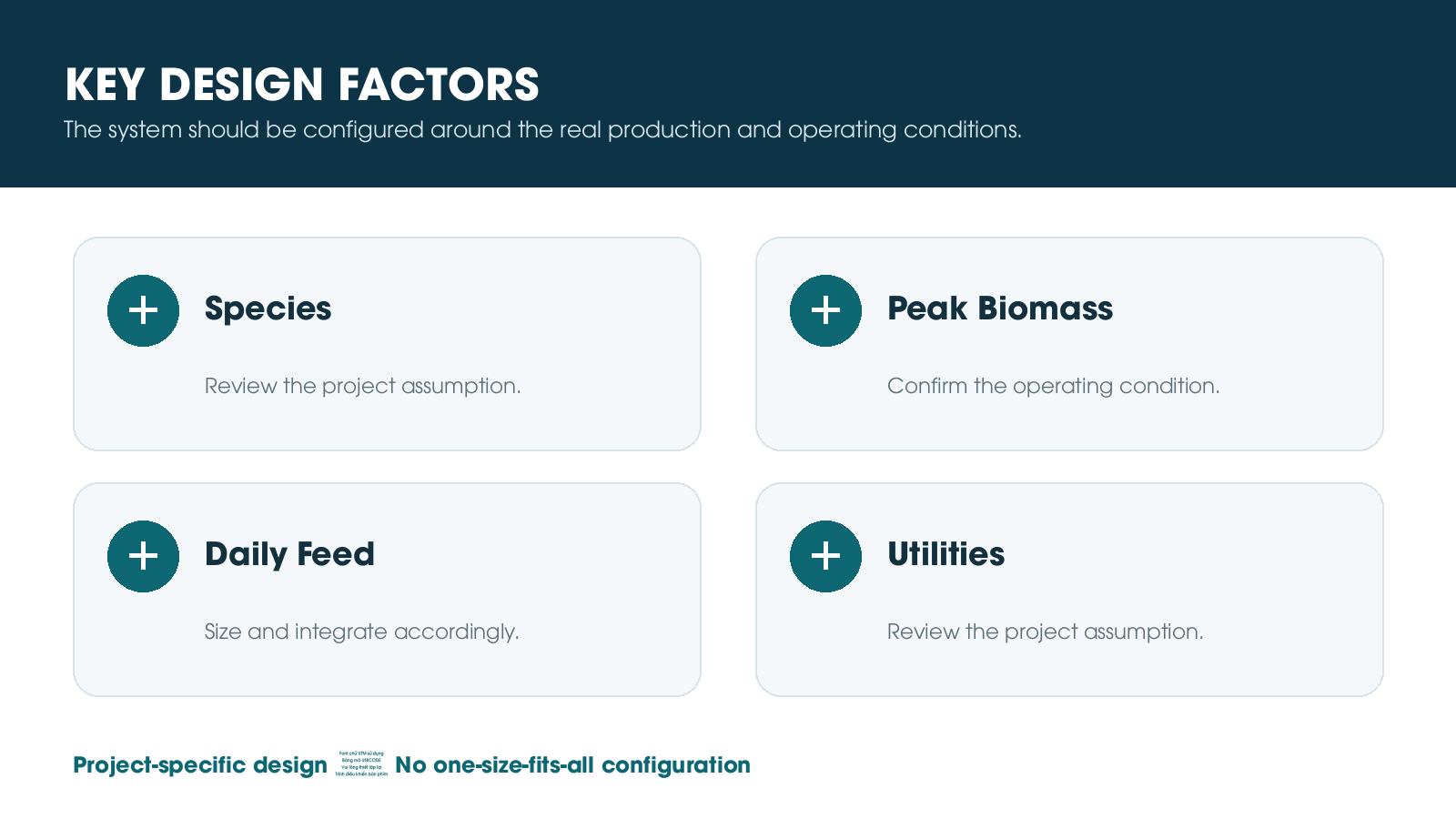
Biomass describes how much animal mass the system must support at a given point in the production cycle. The maximum planned biomass is more useful for sizing than an average value because treatment and oxygen systems must be able to support peak operation. Species and life stage also matter because metabolism, behaviour and water requirements are not identical across farms.
Feed load drives waste production
Feed becomes growth, respiration and waste. As feed input increases, the system generally has more suspended solids and more dissolved nitrogenous waste to manage. That is why feed load is a practical engineering input for mechanical filtration and biological treatment. A farm with modest tank volume but high feed input can place more demand on treatment than a larger, lightly stocked system.
Oxygen demand is linked to production
Stock and biological treatment both depend on oxygen. The design therefore needs an oxygen strategy that reflects biomass, feeding, temperature and the way water is circulated. Oxygen management cannot be considered separately from pumping and gas control because the treatment line has to move and condition enough water to support the culture environment.
Flow connects the treatment stages
Flow determines how quickly water moves between culture and treatment. It influences the duty point of pumps and the operating range of filters and other equipment. Hatch Hives publishes flow capacities for many products, including Compact RAS, drum filters and biological filter tanks, but the correct model cannot be selected from flow alone. The full hydraulic design needs to account for pipes, elevation, valves and equipment resistance.
Treatment capacity must match the load
Mechanical and biological treatment respond to different parts of the waste stream. Mechanical filtration should remove suspended solids early. Biological filtration then supports the treatment of dissolved nitrogenous waste. Additional functions such as protein skimming, UV, ozone, heating, cooling or monitoring may be added according to the species and project requirements.
Capacity is a system relationship
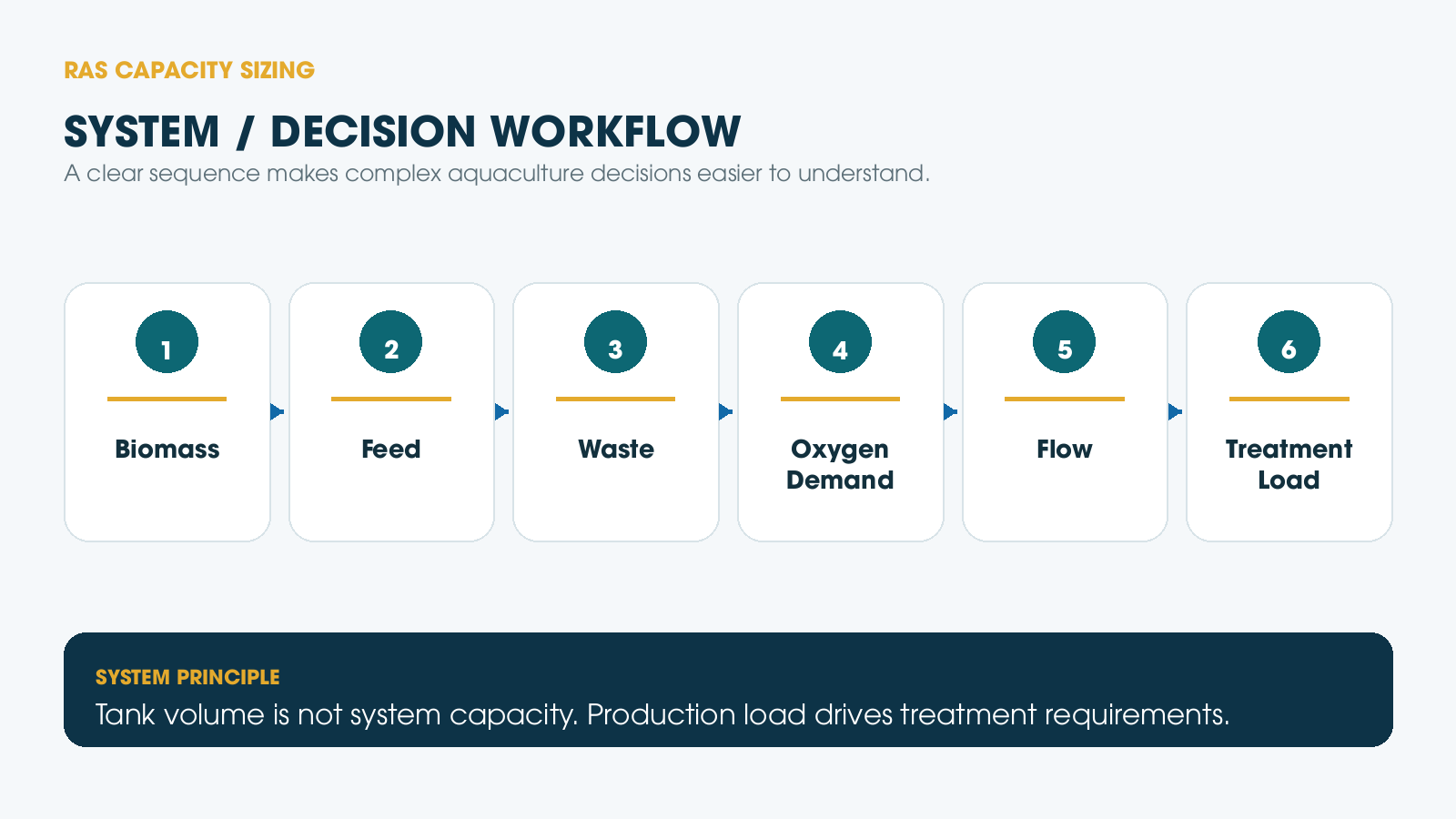
A practical way to think about RAS sizing is: biomass influences feed and oxygen demand; feed influences solids and dissolved waste; flow carries that load through treatment; treatment capacity must be sufficient for the operating target. This is why two farms with the same cubic metres of water can require very different systems. Start with production, then size the water-management system around it.
Practical next step
A good sizing workshop should produce a chain of assumptions rather than one headline capacity number. Write down the planned maximum biomass, feed input, expected operating schedule, required flow and the treatment stages intended to carry that load. Then check each assumption against the selected equipment and utilities. If one input changes, the team can see which parts of the system may also need review. This makes capacity planning more transparent and reduces the temptation to treat cubic metres as a universal shortcut.
Next step: Request production-load-based RAS sizing from Hatch Hives.
Understand why RAS capacity is sized around biomass, feed load, oxygen demand, flow and treatment requirements—not tank volume alone.