


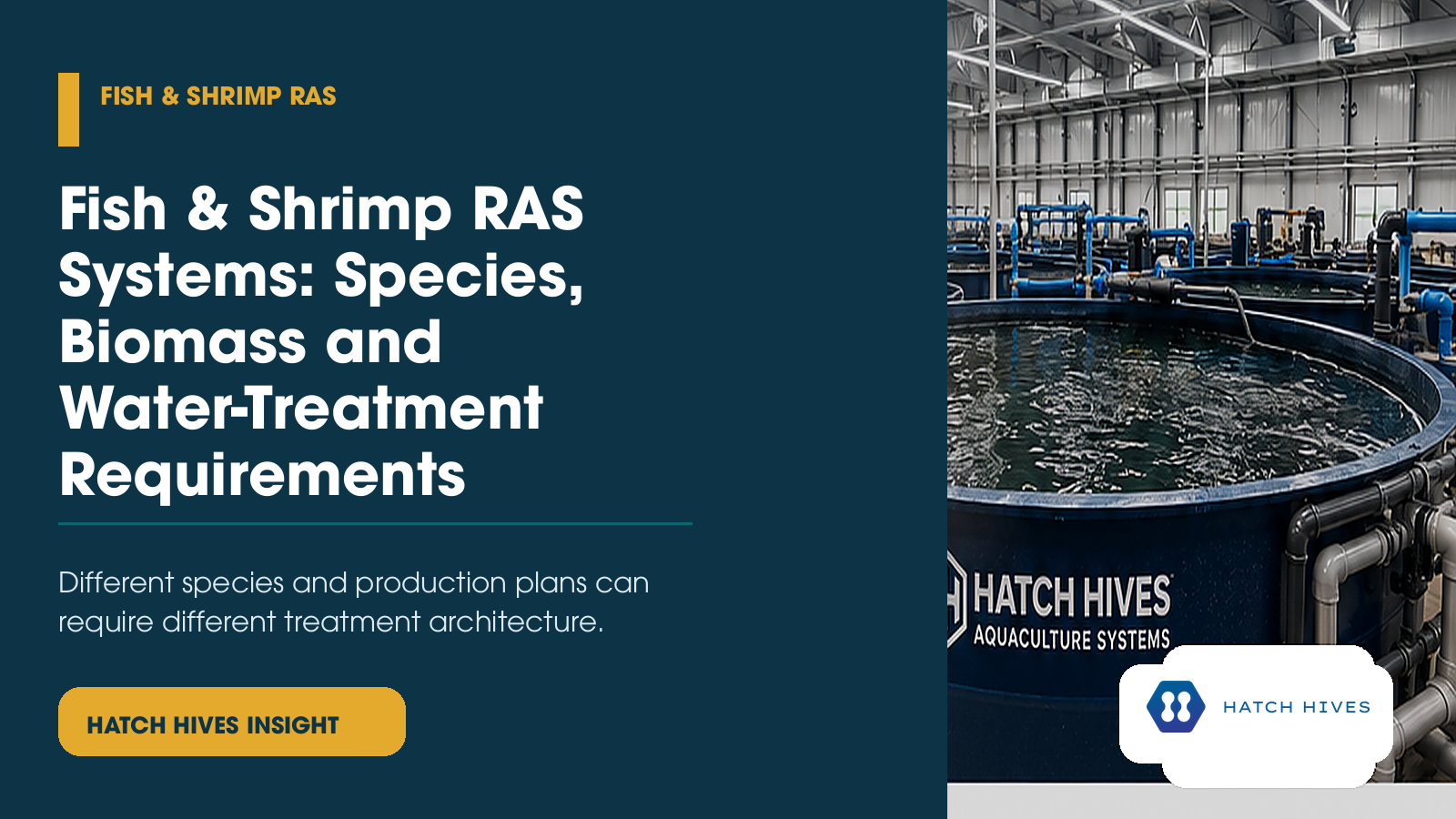
RAS can support a wide range of aquatic species, but a fish RAS and a shrimp RAS should not be treated as the same engineering package. Hatch Hives lists fish, shrimp, crawfish and other species among the applications for RAS and CRAS, while its FAQ emphasises that every project should be customised to species, stocking conditions and operational goals. The system architecture may use similar treatment principles, but the design inputs change with the biology.
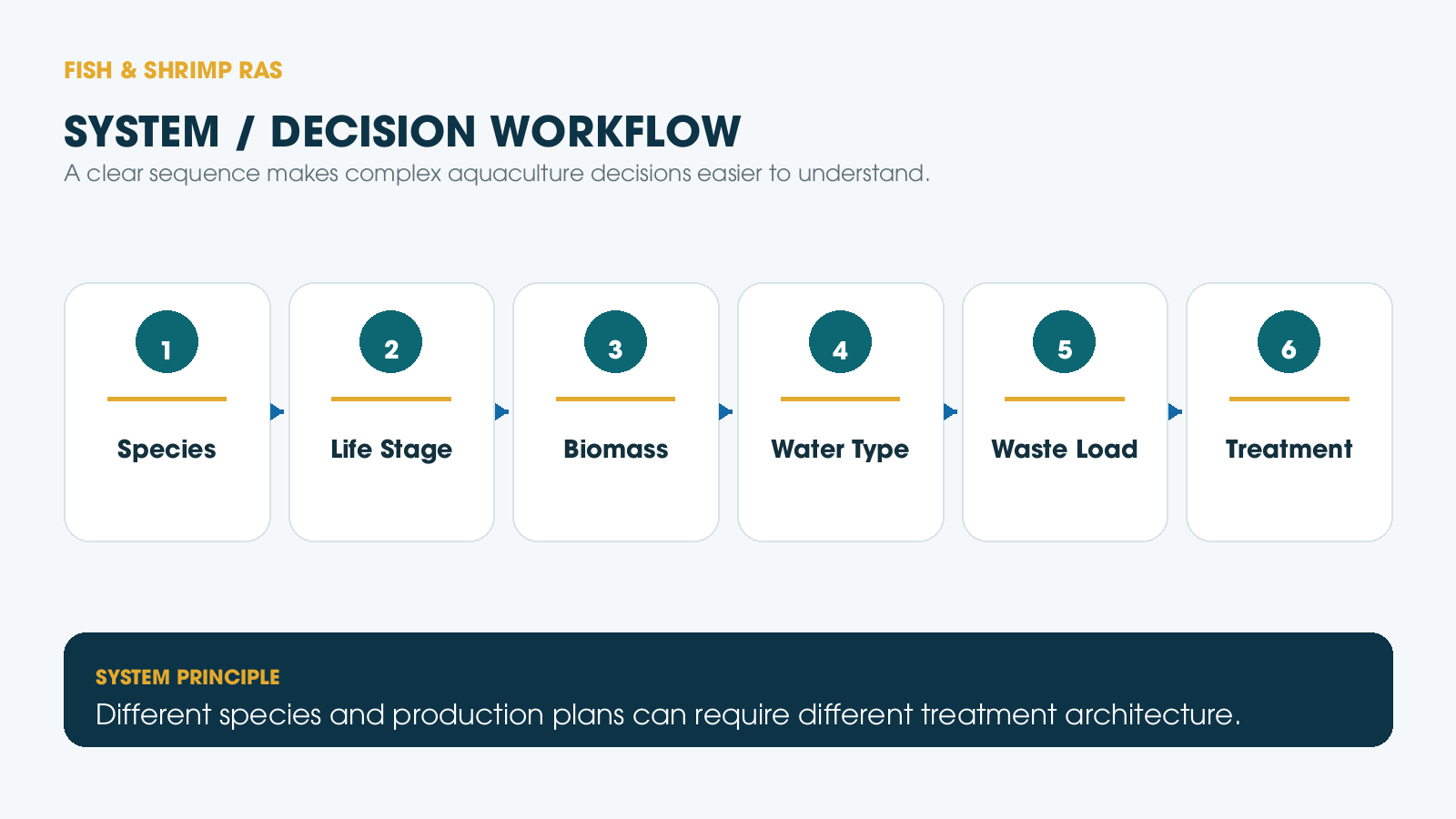
Species and life stage change the design basis
Different species have different temperature, salinity, oxygen and husbandry requirements. Life stage can change tank design and the level of control required. A nursery system may need different flow, tank turnover and handling routines from a grow-out farm. Before equipment selection, the system designer needs to understand the production cycle and the most demanding operating condition.
Freshwater and seawater scenarios
Water type changes equipment materials, biological treatment conditions and operating strategy. Hatch Hives' Compact RAS HH-RAS10 product page lists separate freshwater and seawater scenarios. That is an example of why the same basic RAS concept still needs configuration for the water environment. Source-water quality, salinity and temperature should be part of the project brief.
Biomass and feed determine the daily load
The treatment line must handle what the culture system produces. Biomass and feed input affect solids, nitrogenous waste and oxygen demand. Shrimp systems may also have different fine-solid and husbandry characteristics from finfish systems. Mechanical filtration, biofiltration and water movement should therefore be sized using the production plan, not a generic stocking assumption.
Treatment stages remain connected
The typical workflow is still culture → solids removal → biological treatment → gas and oxygen management → project-specific disinfection or conditioning → monitoring → return. Hatch Hives offers drum filters, MBBR-style biological filtration, protein skimming, pumps and complete RAS/CRAS systems that can be configured within this workflow. The need for each additional stage depends on the species and project.
Monitoring supports species-specific management
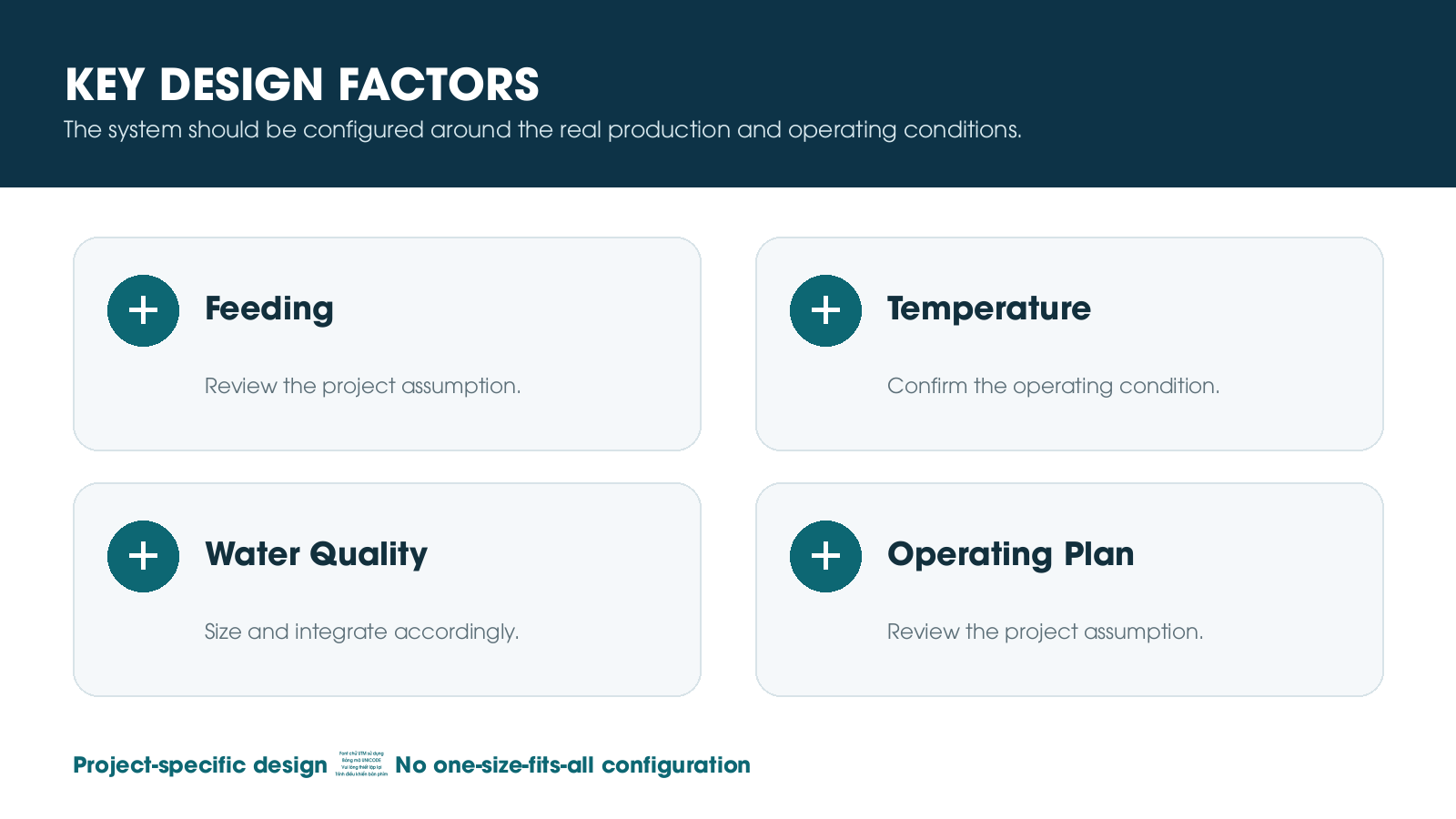
Operators need to monitor the parameters that matter to the stock and system. Hatch Hives says its monitoring development covers pH, dissolved oxygen, ammonia, TDS and other water parameters. The useful range and action thresholds, however, should be set for the specific species, life stage and farm protocol rather than copied from another project.
There is no universal fish-and-shrimp RAS
The value of RAS is control, but control only works when the system is designed around the real production conditions. Use the species and production plan to define the treatment load, then select the architecture and equipment. That avoids forcing very different fish and shrimp projects into the same standard package.
Practical next step
For multi-species businesses, avoid copying one RAS design from one production line to another without review. Even if the same farm team and building are used, a change in species or life stage can change water conditions, feed load, tank management and monitoring priorities. Start each line with its own design basis, then look for equipment or infrastructure that can be shared safely. This preserves standardisation where it helps without assuming that the biology is identical.
Project-specific note
Hatch Hives can customise equipment and farm blueprints for different aquaculture species and regional conditions, which is why species information should be treated as an engineering input rather than a marketing category.
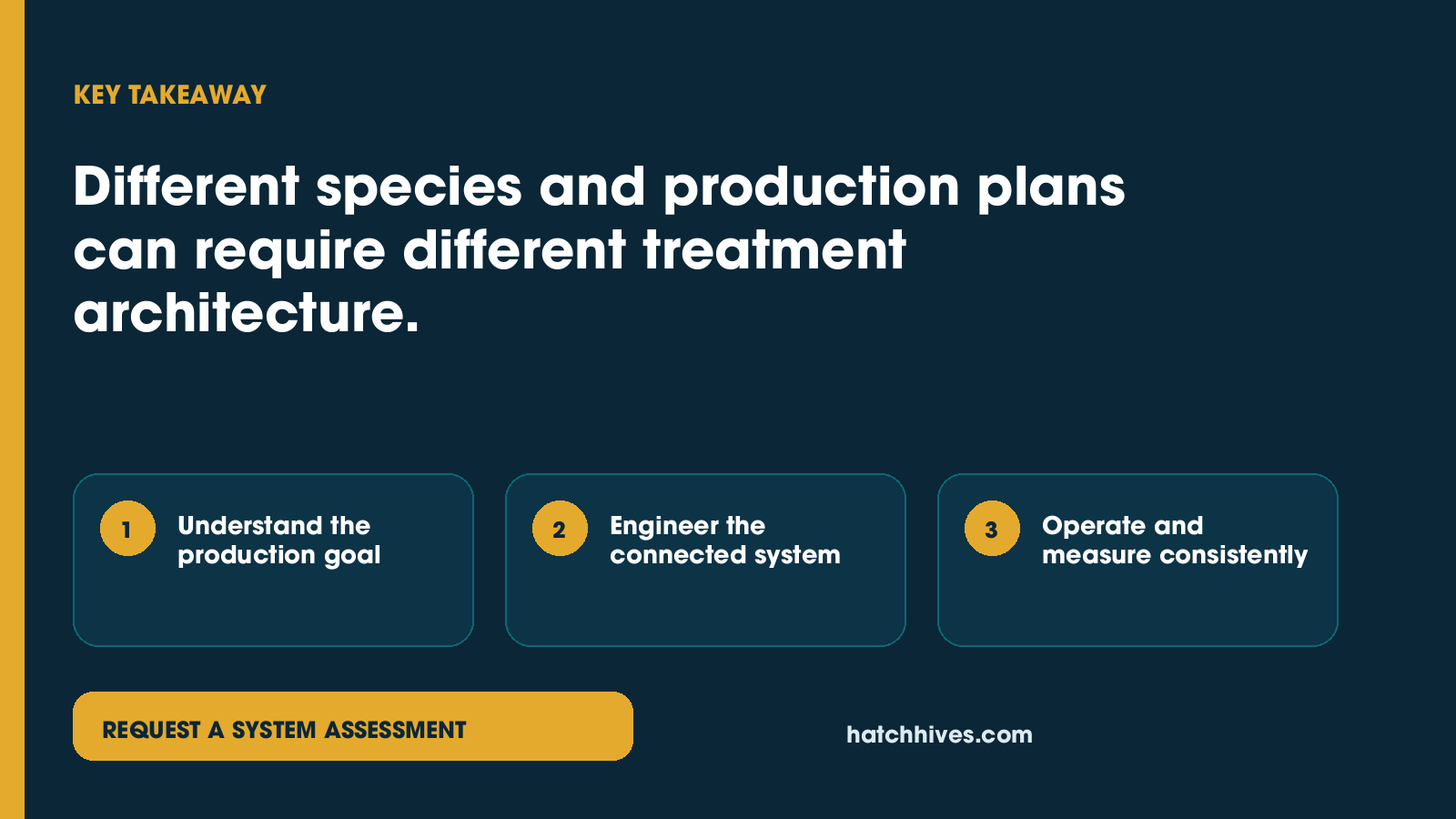
Next step: Send Hatch Hives your species and production target for a preliminary review.
See how species, life stage, biomass, feed, water type and operating conditions change the design of fish and shrimp RAS systems.