


Crawfish farming—also known as crayfish aquaculture—is rapidly emerging as one of the most promising sectors in global aquaculture. Driven by rising seafood demand, environmental pressures on wild fisheries, and advances in farming technology, crawfish production is transitioning from traditional pond systems to highly controlled, sustainable operations. This article explores the latest crawfish farming trends shaping the industry, key innovations, market drivers, and what the future holds for commercial producers.
The Rising Demand for Farmed Crawfish
Global demand for crawfish has grown steadily over the past decade, fueled by:
- Expanding middle-class populations in Asia
- Strong culinary demand in China, Europe, and North America
- Year-round availability requirements from restaurants and retailers
- Declining wild catch reliability
China dominates global production, accounting for the majority of farmed crawfish supply. However, Southeast Asia, Australia, Africa, and parts of Europe are rapidly scaling production, particularly for high-value species such as Cherax quadricarinatus (Australian redclaw).
Farmed crawfish offers consistent size, quality, and biosecurity compared to wild harvests, making aquaculture increasingly attractive to commercial buyers.
Shift Toward Intensive and Controlled Farming Systems
Traditional crawfish farming relied on extensive earthen ponds, often integrated with rice cultivation. While still widely used, modern producers are shifting toward more intensive systems to maximize productivity per unit area.
Recirculating Aquaculture Systems (RAS)
RAS technology is transforming crawfish aquaculture by enabling:
- High stocking densities
- Precise water quality control
- Reduced water consumption
- Biosecure production environments
- Year-round farming independent of climate
RAS facilities are particularly attractive in land-limited regions and urban agriculture projects.
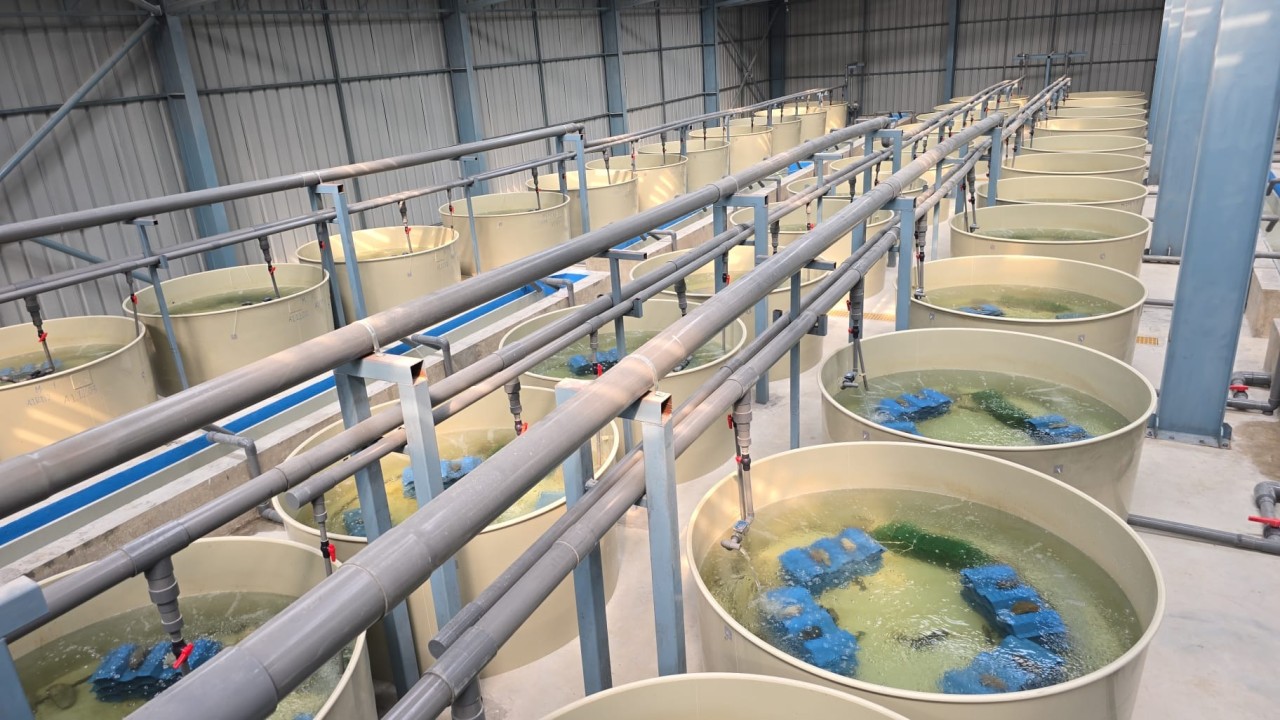
Tank-Based Indoor Farming
Indoor tank systems allow producers to:
- Optimize temperature for faster growth
- Prevent predation and disease introduction
- Automate feeding and monitoring
- Reduce mortality rates
Although capital-intensive, these systems can achieve significantly higher yields compared to traditional ponds.
Integrated Multi-Trophic and Circular Farming Models
A major sustainability trend is the adoption of circular economy principles. Crawfish are well suited for integrated farming because they can utilize organic waste streams.
Examples include:
- Crawfish + rice co-culture systems
- Integration with fish farming operations
- Use of agricultural by-products as feed inputs
- Waste conversion through insects such as black soldier fly larvae
These systems reduce input costs while improving environmental sustainability.
Functional Feeds
Functional feeds are designed to enhance:
- Immune response
- Shell strength and molting success
- Gut health
- Stress tolerance
Probiotics, prebiotics, and mineral supplements are increasingly incorporated into commercial crawfish diets.
Automation and Smart Farming Technologies
Digital transformation is reaching crawfish aquaculture, enabling precision farming practices.
Sensor-Based Water Monitoring
Modern farms deploy sensors to track:
- Dissolved oxygen
- pH levels
- Temperature
- Ammonia and nitrite concentrations
Real-time monitoring helps prevent catastrophic losses and improves feed efficiency.
Data-Driven Farm Management
Cloud-based platforms allow farmers to:
- Track production metrics
- Predict harvest timelines
- Optimize stocking densities
- Manage multiple sites remotely
Smart aquaculture is becoming essential for scaling commercial operations.
Selective Breeding and Improved Stock
Genetic improvement programs are enhancing crawfish performance across several traits:
- Faster growth rates
- Disease resistance
- Improved feed conversion
- Larger harvest sizes
- Uniformity in production batches
Specific pathogen-free (SPF) broodstock programs are gaining importance as disease risks increase with intensification.
Expansion into New Geographic Regions
While China remains dominant, commercial crawfish aquaculture is expanding globally:
- Southeast Asia: Rapid growth due to favorable climate and market proximity
- Africa: Emerging as a production hub with abundant land and water resources
- Europe: Focus on high-quality niche markets
- Middle East: Investment in indoor RAS projects
Urban and peri-urban farms are also emerging to supply fresh crawfish to metropolitan markets.
Future Outlook for Crawfish Farming
The future of crawfish aquaculture is expected to be shaped by:
- Increased adoption of RAS and indoor farming
- Greater automation and AI integration
- Expansion of circular economy models
- Development of premium branded products
- Stronger biosecurity protocols
- Continued global market growth
As technology lowers production risks and improves efficiency, crawfish farming is poised to become a mainstream aquaculture sector alongside shrimp and fish.
Conclusion
Crawfish aquaculture is undergoing a transformation from traditional pond-based practices to technologically advanced, sustainable production systems. With rising global demand, improvements in feed, genetics, and automation, and the adoption of circular farming approaches, crawfish farming offers significant opportunities for both small-scale farmers and large commercial operations.
Producers who embrace innovation, biosecurity, and sustainability will be best positioned to succeed in this rapidly evolving industry.