


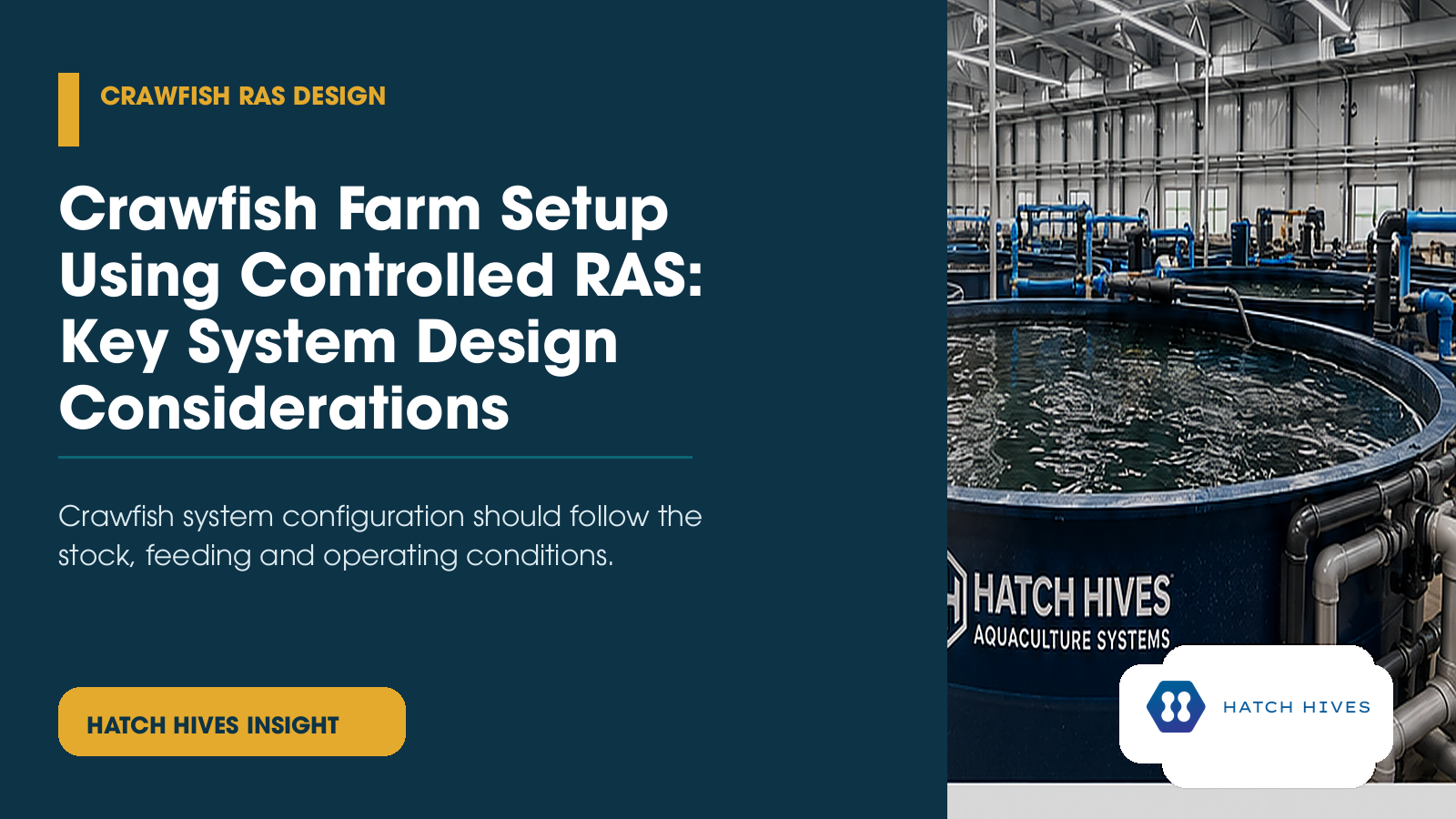
Crawfish can be farmed in controlled aquaculture systems, but a crawfish RAS should still be designed around the specific species, life stage and husbandry method. Hatch Hives identifies crawfish among the species that can be supported by RAS and CRAS, and its wider project work includes controlled and integrated farming. For a practical system design, the starting point is not a generic “crawfish filter”; it is the biological and operating load created by the planned production method.
Confirm the species and production stage
Crawfish species differ in behaviour and farming requirements. Hatch Hives has published content around Cherax quadricarinatus, or redclaw crawfish, and highlights the importance of controlled management and containment. A hatchery, juvenile nursery and grow-out system may need different tank geometry, shelter, grading and handling routines. The species and life stage therefore need to be confirmed before the treatment line is sized.
Design around biomass, feed and solids
Feed input and animal waste create the treatment load. Crawfish systems can also generate particulate material from feed, moulting and tank maintenance. Mechanical solids removal should be planned so waste is exported from the water loop before it breaks down further. The appropriate drum-filter size or other mechanical stage depends on the flow and load of the project.
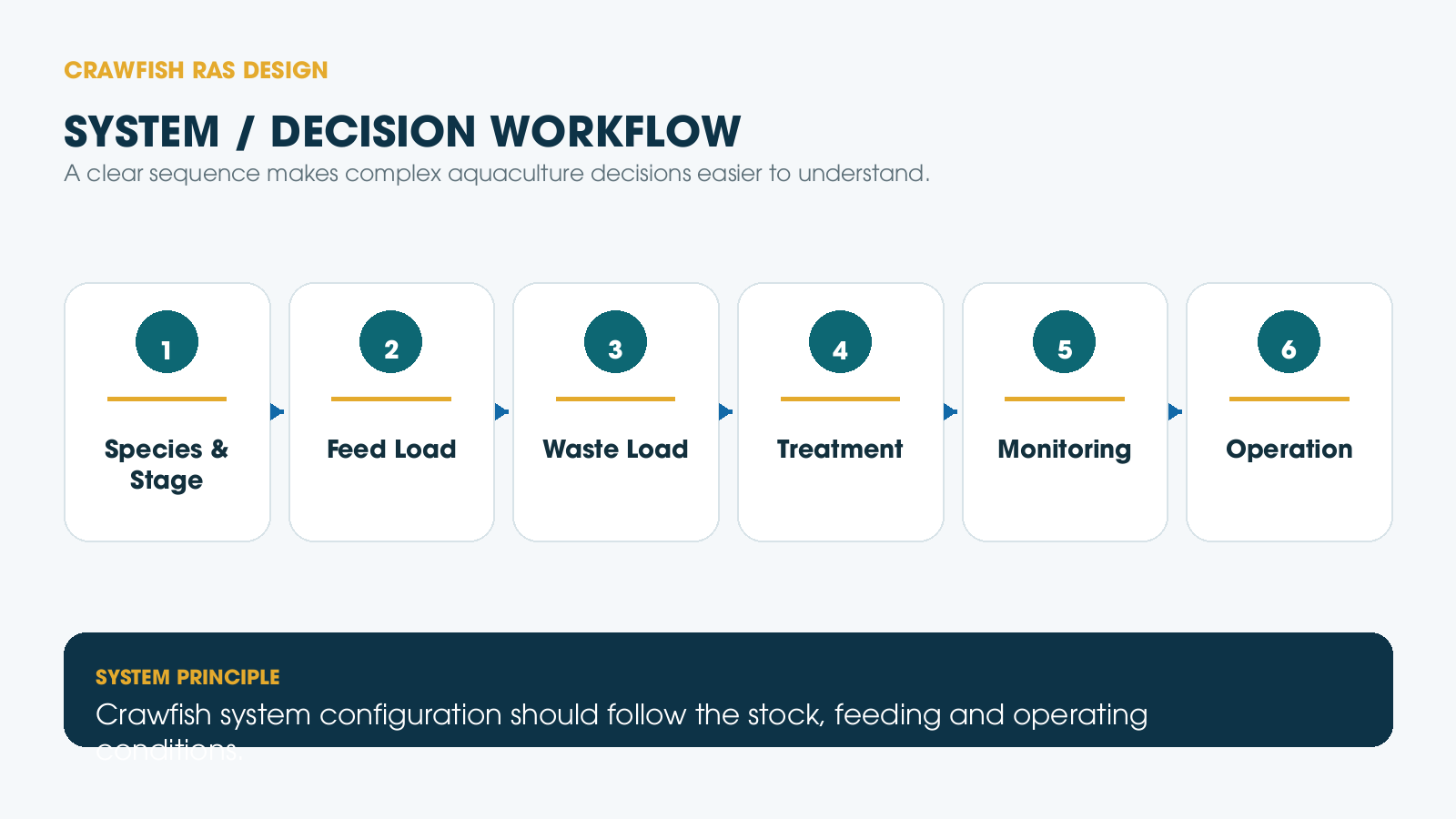
Use biological treatment as part of the complete loop
Biological filtration supports the management of nitrogenous waste, but it does not work independently from solids removal, oxygen and flow. Hatch Hives supplies MBBR-style biological filtration and bio-media that can be incorporated into RAS architecture. The amount of media, flow pattern and operating conditions should follow the expected production load.
Consider behaviour and daily husbandry
Crawfish husbandry includes more than water quality. Shelter, density management, grading, feeding access, moulting and containment can affect how the culture area is laid out. These husbandry decisions also influence labour and cleaning routines. A controlled RAS can support water management, but the culture design still has to reflect the animal's behaviour.
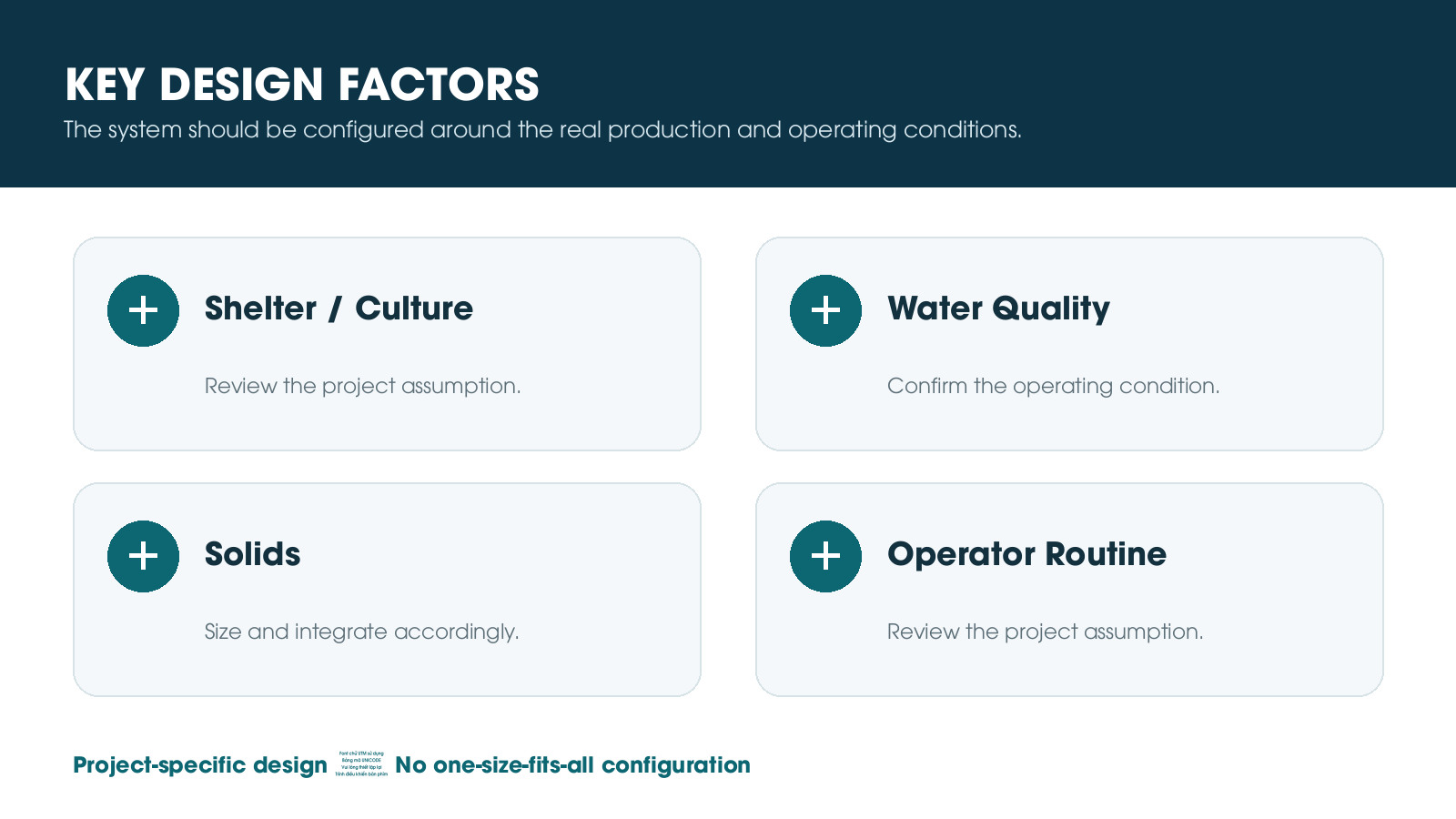
Plan monitoring, backup and operator routines
A commercial system should have a clear daily check routine for water conditions, flow, pumps, filters and stock behaviour. Backup planning is important because recirculating systems depend on continuous water movement and aeration or oxygen strategy. Hatch Hives' consultation and support services can cover system setup and troubleshooting, while the farm team remains responsible for daily observation and husbandry.
Connect crawfish production to the wider farm plan
For some farms, the first step may be a pilot system to validate operating routines before expansion. Others may integrate crawfish into a broader controlled or circular farming model. In either case, the RAS design should start with the intended production method and scale, then select Compact RAS, customised RAS, CRAS or equipment modules accordingly.
Practical next step
For crawfish projects, involve the husbandry team in the engineering discussion early. Tank access, shelter placement, grading, feeding and containment can change the way water and solids move through the culture area. Those details may influence drain positions, cleaning routines and labour demand. A technically capable water-treatment plant cannot compensate for a culture layout that is difficult to manage. The strongest design connects animal behaviour, farm routine and water treatment rather than treating them as separate topics.
Project-specific note
Containment and responsible husbandry should also be part of the project plan, especially when farming species outside their native range or under local rules that require controlled handling and biosecurity.
Next step: Discuss a crawfish system assessment with Hatch Hives.
Key design considerations for a crawfish RAS setup, including species, life stage, biomass, feed, shelters, waste management, water treatment and operations.