


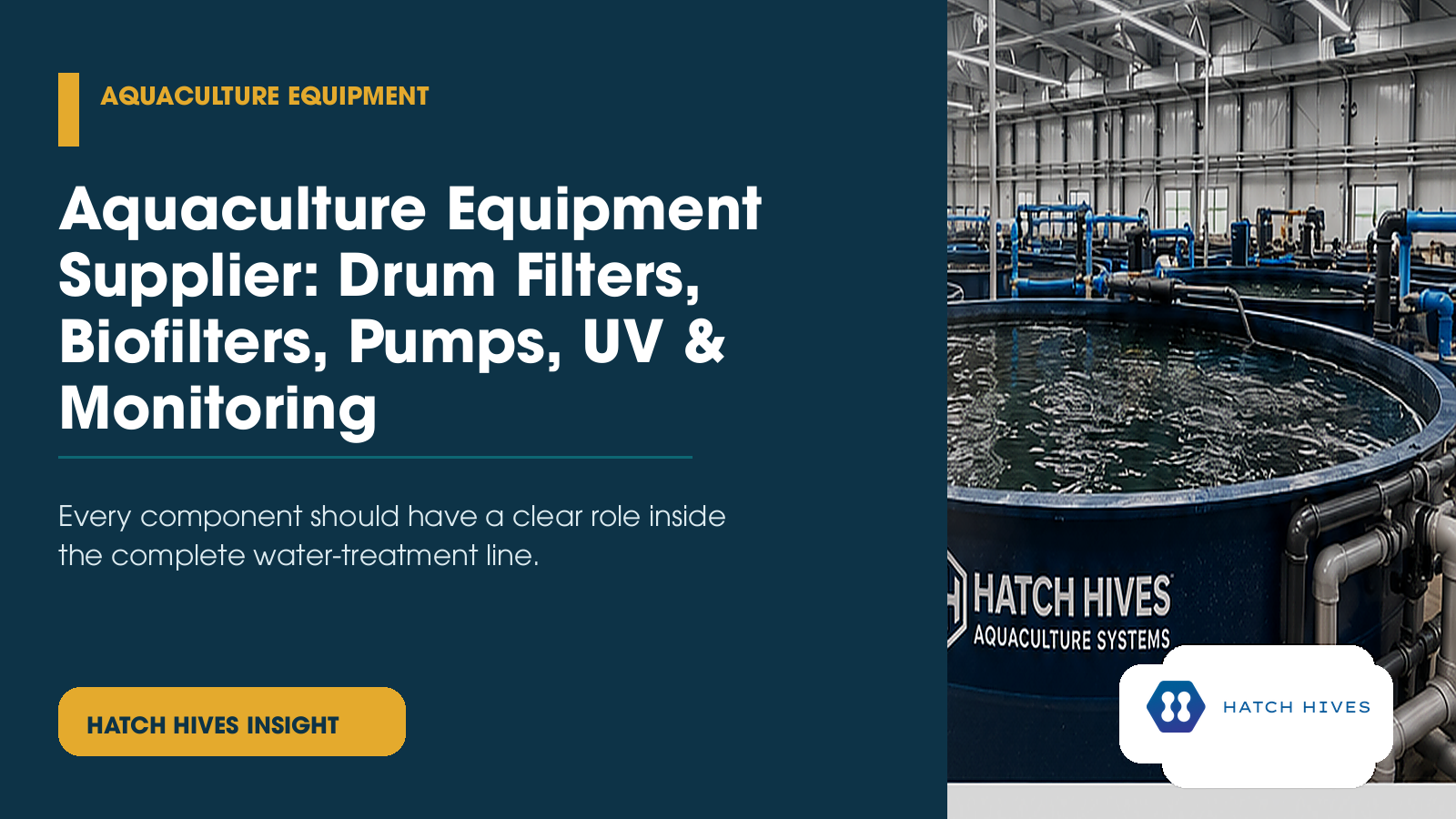
Aquaculture equipment is most useful when every component has a defined role in the water-treatment line. Hatch Hives supplies equipment ranging from stainless rotary drum filters and biological filters to bio-media, protein skimmers, pumps and complete Compact RAS, RAS and CRAS systems. Rather than treating the catalogue as a list of independent machines, buyers should understand what enters each component, what problem it is intended to address, and what the next treatment stage needs from it.
Rotary drum filters: mechanical solids removal
A rotary drum filter is used to capture suspended solids from the water stream. Hatch Hives lists stainless drum-filter models covering different flow ranges, with 60-micron filtration stated across the series on the product page. In the system workflow, this stage helps remove particulate waste early so it does not continue breaking down through the rest of the treatment loop.
Biological filters and bio-media
Biological treatment provides surfaces for beneficial microorganisms. Hatch Hives offers a moving-bed biological filter, a biological filter tank and 25 mm HDPE bio-media. The product pages present these items as RAS treatment components for nitrogen management. Their effective capacity depends on the actual production load, flow, temperature and operating conditions, so they should be sized as part of the system rather than selected by tank volume alone.
Protein skimming and additional conditioning
Hatch Hives' protein skimmers are designed to remove dissolved organic compounds and fine material through fractionation. The CRAS product architecture can also include ozone and UV disinfection. These functions may be useful in specific system designs, especially where dissolved organics or additional conditioning are part of the treatment strategy. The need and operating setpoints should be determined for the project.
Pumps and water movement
Pumps connect every treatment stage. Their job is not only to move a target flow rate; they must do so against the actual hydraulic resistance of the system. Pipe diameter, elevation, valves, fittings and equipment all affect the duty point. Hatch Hives carries several pump ranges, but pump selection should follow the final hydraulic design.
Monitoring and controls
A controlled system needs information. Hatch Hives says it is developing monitoring around pH, dissolved oxygen, ammonia, TDS and other water parameters. CRAS also includes flow measurement, water monitoring and PLC controls in its listed configuration. Monitoring does not replace husbandry; it helps operators identify trends and system changes earlier.
Think in treatment roles
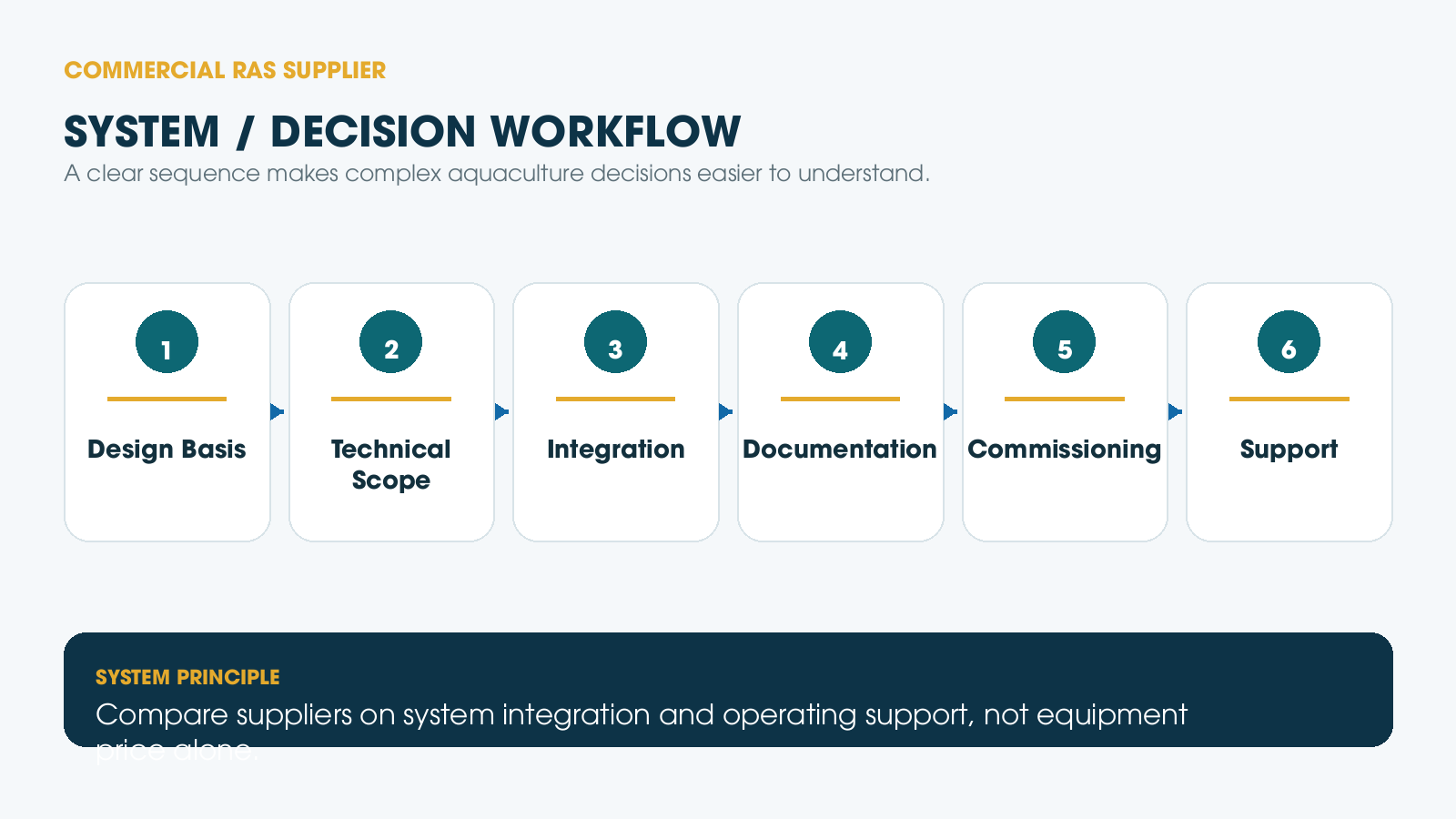
A useful equipment conversation follows the water: remove solids, manage dissolved waste, control gases and oxygen, add project-specific conditioning, monitor the system and return water to production. When equipment is selected in that context, specifications become part of a complete engineering decision rather than a shopping list.
Practical next step
When reviewing an equipment list, add two columns beside every item: 'treatment role' and 'operator check'. The first forces the design team to explain why the equipment is needed. The second forces the operating team to understand how they will know it is working. For example, a drum filter is not just a stainless machine; it is the mechanical solids-removal stage, and operators need to observe screening, cleaning and waste discharge. This simple exercise turns a catalogue into an operating system map.
Project-specific note
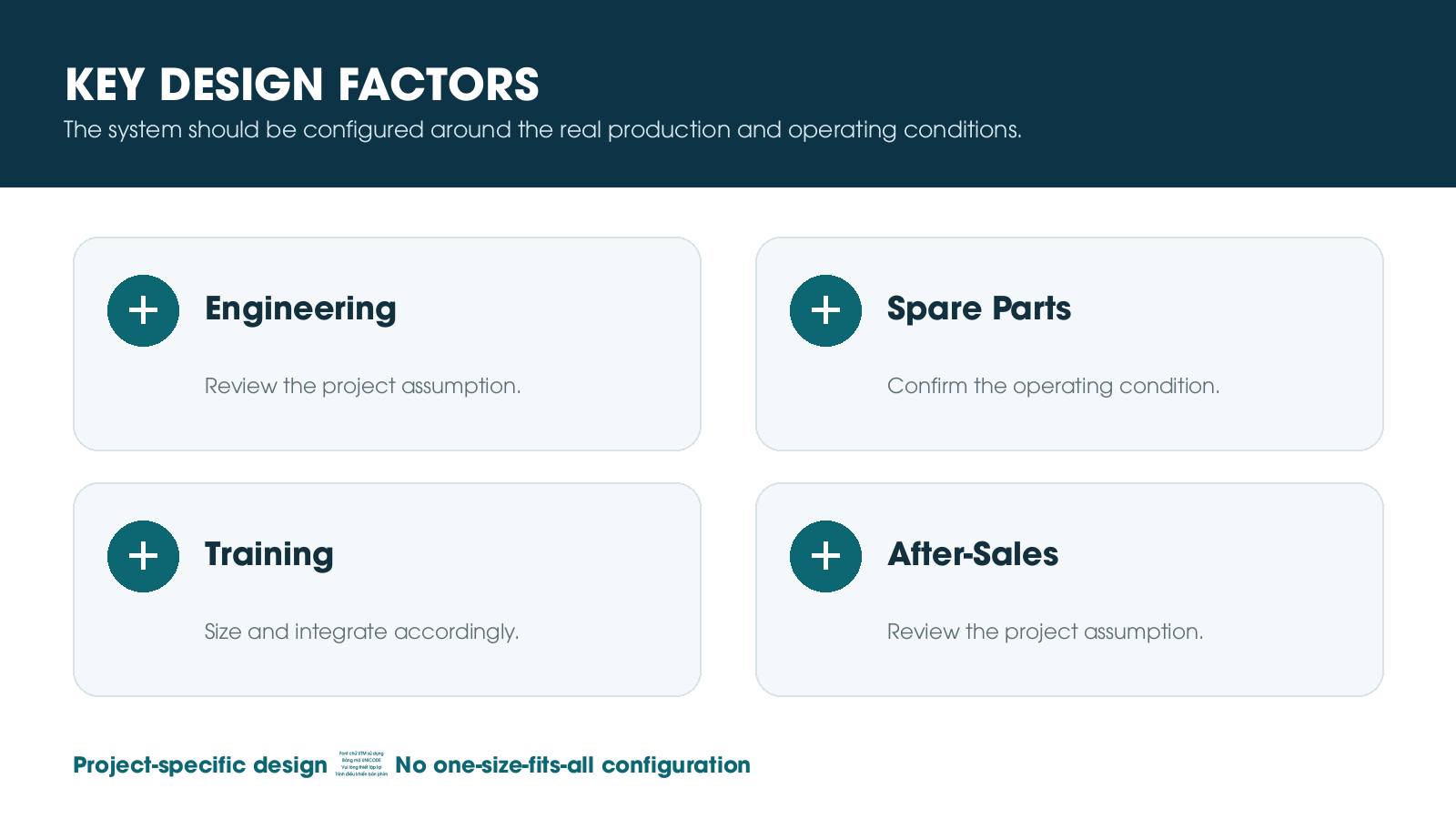
Where a product page lists a technical capacity, treat that figure as an equipment specification within stated conditions, not as proof that the same model is appropriate for every farm using a similar water volume.
Next step: Ask Hatch Hives to configure equipment as one connected treatment line.
Key design considerations for a crawfish RAS setup, including species, life stage, biomass, feed, shelters, waste management, water treatment and operations.